


Overview
For a few weeks in 2016, the internet decided that the funniest thing a group of people could do was absolutely nothing.
No dancing. No lip-syncing. No prank setup. No punchline, really.
Just a room full of people frozen mid-action while someone slowly walked through with a camera, usually while Rae Sremmurd’s “Black Beatles” played in the background.
That was the Mannequin Challenge: one of those perfectly stupid, strangely satisfying internet trends that made sense immediately. You saw one video and thought, “Right, I get it.” Then two minutes later you were watching a football team, a school cafeteria, a celebrity party, and possibly someone’s nan all standing completely still like time had glitched.
And for a brief moment, standing still became content.
- FIRST SEEN October 2016
- PLATFORMS Facebook, Instagram, X (Twitter), YouTube
- POPULARITY 9.8M+ Twitter mentions by Dec 21, 2016 (peak-era snapshot).
- FIRST KNOW CREATOR Twitter user @pvrity___ (student; earliest cited post) / group at Edward H. White High School (Jacksonville)
- HASHTAGS #MannequinChallenge, #BlackBeatles
What Was the Mannequin Challenge?
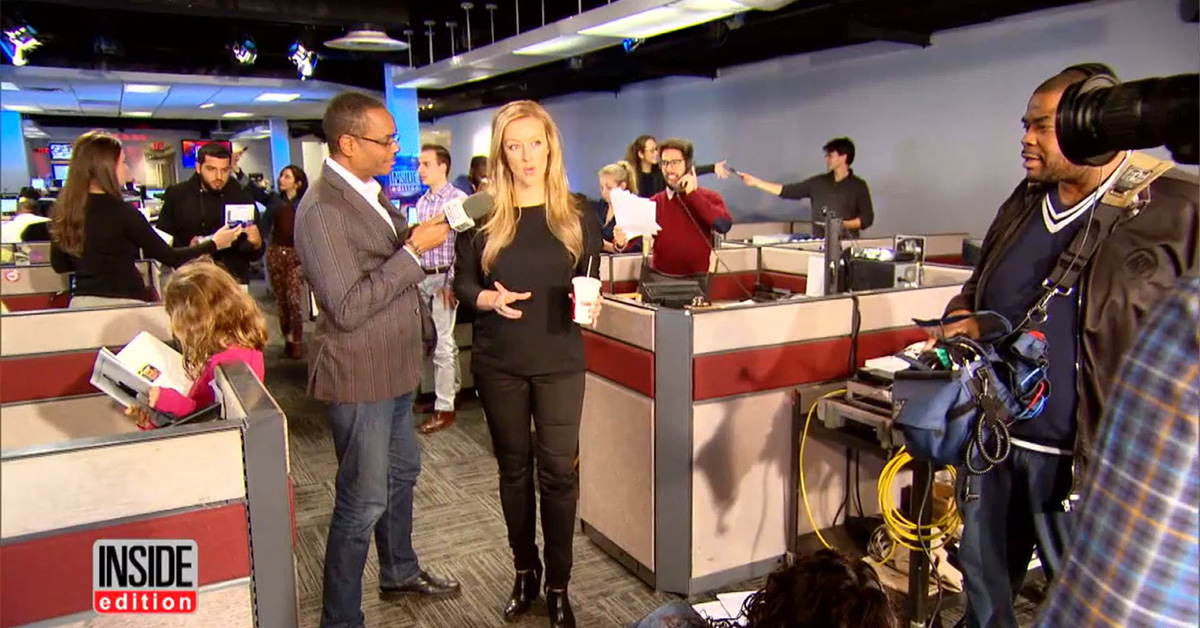
The Mannequin Challenge was a viral video trend where people froze in place like mannequins while a camera moved through the scene.
The best ones looked like someone had hit pause on a busy room:
- a student stuck mid-high-five
- someone pouring water that somehow didn’t spill
- a group frozen during a party
- athletes paused in the locker room
- celebrities pretending not to blink for 45 seconds
The moving camera was the trick. It made the scene feel less like a photo and more like a weird little museum exhibit of human nonsense.
Most versions used “Black Beatles” by Rae Sremmurd featuring Gucci Mane, which became so tied to the trend that hearing the opening of the song now instantly summons images of frozen teenagers in school corridors. The challenge became especially popular in November 2016, spreading across Twitter, Instagram, Facebook, and YouTube.
It was basically the Harlem Shake’s calmer cousin.
Instead of everyone suddenly losing it at the drop, everyone did the opposite. They committed to the bit by becoming furniture.
The Origin: A Jacksonville Classroom and One Very Still Student
Like a lot of good internet trends, the Mannequin Challenge didn’t begin in a marketing meeting or a celebrity content studio.
It started with students.
The trend is generally traced back to Edward H. White High School in Jacksonville, Florida, in late October 2016. According to reports, one student walked to the front of a classroom and froze in place. Someone said she looked like a mannequin. From there, the idea became: what if everyone froze?
The first widely credited clip came from students at the school around October 26, 2016. It showed classmates holding poses while the camera moved around them. No huge production. No polished edit. Just a simple idea done well enough that other people could copy it instantly.
That last bit matters.
The Mannequin Challenge worked because it was incredibly easy to understand and hard enough to make people want to try a better version.
You didn’t need an app filter.
You didn’t need choreography.
You didn’t need to be funny on camera.
You just needed a group of people willing to stand weirdly still for half a minute.
Examples
Twitter/X – @HillaryClinton (Nov 8, 2016): “Don’t stand still. Vote today.” (plane video).
NBA.com/People – (Nov 10-11, 2016): Cleveland Cavaliers & Michelle Obama do the challenge at the White House.
TIME/Pitchfork – (Nov 10-11, 2016): Paul McCartney‘s Mc-meta clip with “Black Beatles.”
ESA astronaut Thomas Pesquet (Dec 29, 2016): ISS Mannequin Challenge.
How “Black Beatles” Became the Soundtrack
The funny thing about the Mannequin Challenge is that “Black Beatles” was not necessarily baked into the very first version. But once the song got attached to the trend, it became almost impossible to separate the two.
By early November 2016, videos using Rae Sremmurd’s “Black Beatles” were everywhere. The song’s slow, woozy opening worked perfectly with the camera movement. It gave the videos a cool, slightly surreal feeling, like everyone had frozen during the most casually stylish apocalypse possible.
The trend also gave the song a ridiculous boost. On November 14, 2016, Pitchfork reported that “Black Beatles” had reached No. 1 on the Billboard Hot 100, ending The Chainsmokers’ “Closer” 12-week run at the top. The track earned 144,000 downloads and 43.3 million streams in the previous week, helped heavily by the #MannequinChallenge.
That is very 2016.
A rap single becomes unavoidable because thousands of people are filming themselves pretending to be shop displays.
Why the Mannequin Challenge Spread So Fast
The Mannequin Challenge had the perfect viral recipe for the mid-2010s internet.
It was visual, simple, collaborative, and just competitive enough. Every new group could look at the last one and think, “We can make ours better.”
A classroom could do it.
A sports team could do it.
A TV show could do it.
A whole concert crowd could do it if everyone played along.
The format invited escalation:
- More people in the shot
- More complicated poses
- Bigger locations
- Better camera movement
- Harder-to-hold positions
- Objects frozen mid-action
- Unexpected celebrity cameos
It also arrived at exactly the right time. In 2016, social platforms were already built for this kind of thing. Twitter made it spread quickly. Instagram made it look cool. Facebook helped it reach parents, teachers, news pages, and local community groups. YouTube collected the “best of” compilations.
The Mannequin Challenge was short enough to watch, easy enough to remake, and flexible enough that nobody owned the format.
That is usually when a meme starts running around unsupervised.
The Celebrity Phase Came Quickly
The Mannequin Challenge had the perfect viral recipe for the mid-2010s internet.
It was visual, simple, collaborative, and just competitive enough. Every new group could look at the last one and think, “We can make ours better.”
A classroom could do it.
A sports team could do it.
A TV show could do it.
A whole concert crowd could do it if everyone played along.
The format invited escalation:
- More people in the shot
- More complicated poses
- Bigger locations
- Better camera movement
- Harder-to-hold positions
- Objects frozen mid-action
- Unexpected celebrity cameos
It also arrived at exactly the right time. In 2016, social platforms were already built for this kind of thing. Twitter made it spread quickly. Instagram made it look cool. Facebook helped it reach parents, teachers, news pages, and local community groups. YouTube collected the “best of” compilations.
The Mannequin Challenge was short enough to watch, easy enough to remake, and flexible enough that nobody owned the format.
That is usually when a meme starts running around unsupervised.
The Celebrity Phase Came Quickly
Once a trend reaches celebrities, it usually has about five minutes before it starts feeling like your headteacher saying “on fleek” in assembly.
The Mannequin Challenge reached that stage very quickly.
By early-to-mid November 2016, everyone from musicians to athletes to politicians had joined in. Beyoncé, Kelly Rowland, and Michelle Williams did a Destiny’s Child version. Adele made a Western-themed one. Ellen DeGeneres, Britney Spears, Taylor Swift, and loads of TV crews and sports teams got involved too. TIME’s roundup from November 2016 listed versions from Rae Sremmurd, Paul McCartney, The New York Giants, James Corden, Destiny’s Child, Dancing with the Stars, Soul Train Awards, and Michelle Obama with the Cleveland Cavaliers.
Some of these were genuinely good. Some were clearly “the social team said we should do this.”
Both are part of the charm.
Paul McCartney’s Version Was Accidentally Perfect
One of the funniest celebrity entries came from Paul McCartney, because the song was called “Black Beatles.”
It was almost too neat.
McCartney posted his own Mannequin Challenge clip on November 10, 2016, standing frozen beside a piano with the caption “Love those Black Beatles.” TIME noted that the video was retweeted by Rae Sremmurd and quickly became one of the most meta versions of the whole trend.
You can imagine the internet collectively nodding at that one.
Fair enough. That’s allowed.
The Political Mannequin Challenge Moment
Because it was November 2016, the Mannequin Challenge also crashed into American politics.
On the night before the 2016 U.S. presidential election, Hillary Clinton and her campaign team filmed a Mannequin Challenge video on a campaign plane. It included Bill Clinton and Jon Bon Jovi, and the caption played on the trend with the line “Don’t stand still. Vote today.” TIME reported that the hashtag had been used 2.3 million times on Twitter in the previous week.
It is one of those clips that now feels aggressively 2016.
A viral youth trend.
A campaign plane.
Jon Bon Jovi.
A voting pun.
All sealed in amber.
Michelle Obama, LeBron, and the White House Version
Another major entry came when Michelle Obama joined the Cleveland Cavaliers for a version at the White House.
The Cavaliers had recently won the NBA Championship, and during their visit, they took part in the challenge with the First Lady. It became one of the most shared high-profile versions, partly because it had the strange visual novelty of seeing championship athletes and Michelle Obama frozen in place like they were waiting for a museum tour to restart.
This was the point where the Mannequin Challenge was no longer just a school trend.
It had entered the “your aunt has seen it on Facebook” zone.
The Best Versions Felt Like Tiny Movie Scenes
The strongest Mannequin Challenge videos were not necessarily the ones with famous people.
They were the ones where the scene had little details.
Someone suspended mid-laugh. Someone pretending to fall. A ball frozen in the air. A lunchroom turned into a still-life painting of teenage chaos. A gymnastic team holding poses that looked uncomfortable enough to require medical supervision.
The format rewarded imagination, but not in a complicated way. It was basically a group project where the assignment was: make standing still look interesting.
Some popular versions leaned into:
- school scenes, with students frozen in corridors, stairwells, classrooms, and cafeterias
- sports locker rooms, where athletes paused mid-celebration
- concert crowds, where performers froze along with the audience
- TV studios, where presenters, crew, guests, and audiences all joined in
- celebrity parties, because apparently even famous people enjoy pretending to be objects
There was something oddly satisfying about seeing a busy space turned into a snapshot. Not deep. Just satisfying.
Like a Where’s Wally page, but everyone is trying very hard not to blink.
It Was Also a Very 2016 Meme
The Mannequin Challenge sits in a specific era of internet culture.
This was before TikTok became the default home of viral challenges. The internet was still passing trends around through Twitter videos, Instagram posts, Facebook shares, Vine leftovers, YouTube compilations, and morning TV segments.
A challenge could start with teenagers, get picked up by athletes, hit celebrity feeds, become a news segment, and then arrive in workplace team-building videos within about a week.
That speed now feels normal. In 2016, it still felt slightly ridiculous.
The Mannequin Challenge also belonged to the same family as other participatory internet crazes:
- Planking: lie face down somewhere weird
- Harlem Shake: one person dances, then everyone goes mad
- Ice Bucket Challenge: dump cold water on yourself for charity
- Running Man Challenge: dance to “My Boo”
- Mannequin Challenge: do nothing, but make it cinematic
Its genius was that it removed almost all embarrassment.
You didn’t have to dance.
You didn’t have to speak.
You didn’t even have to move.
For the camera-shy, this was a gift.
The Activist Versions Took It Somewhere Else
Most Mannequin Challenge videos were silly. But the format also got used for heavier subjects.
In November 2016, a Black Lives Matter-themed Mannequin Challenge appeared online, using the frozen-tableau format to recreate scenes connected to police shootings and racial injustice. Know Your Meme notes that one such video was posted to YouTube on November 9, 2016, showing still scenes based on incidents from that year.
That version showed how quickly a meme format could be repurposed.
The same structure that worked for a high school hallway could also become a visual protest. Whether viewers found that powerful, uncomfortable, or both, it proved the Mannequin Challenge was more flexible than it looked.
Stillness, it turned out, could be used for more than a gag.
The Backlash and Overuse Came Right on Schedule
Every viral challenge has a life cycle.
First, it feels fresh.
Then everyone joins in.
Then brands discover it.
Then local councils discover it.
Then people start asking if we can please do literally anything else.
By December 2016, the Mannequin Challenge was already being treated as a trend that had maybe reached its limit. The Guardian was asking whether it had “come to a standstill” by December 20, 2016, after weeks of celebrity, sports, political, and workplace versions.
That was the natural ending.
The problem with a format that anyone can do is that everyone eventually does it. And once you’ve seen a dozen office teams freeze beside a photocopier, the magic does start to thin out.
But that does not mean the trend failed.
It means it completed the full meme journey.
The Weird Legacy: AI Researchers Used It Later
Here is one of the stranger afterlives of the Mannequin Challenge.
Years later, the videos were useful in machine learning research.
Because Mannequin Challenge clips often had a moving camera but mostly still people, they created an unusual kind of video data. In 2019, Google AI researchers used Mannequin Challenge videos to help train neural networks on depth prediction — essentially helping systems understand three-dimensional space from two-dimensional images.
That is a very funny fate for a meme.
Teenagers froze in classrooms for a joke, and years later, researchers found the footage useful because everyone had accidentally created a library of moving-camera/static-human scenes.
The internet is mostly nonsense, but occasionally the nonsense is technically useful.
Why People Were So Obsessed With It
The Mannequin Challenge worked because it hit several internet buttons at once.
It was easy to copy, but still gave people room to show off. It felt communal. It looked good on camera. It had a catchy soundtrack. And it let ordinary spaces — classrooms, gyms, offices, locker rooms — feel briefly cinematic.
The obsession came from the tiny details. The more you watched, the more you looked for:
- who blinked
- who picked the hardest pose
- whether the camera move was smooth
- whether someone was clearly about to laugh
- how many people they managed to include
- whether the whole thing looked effortless or painfully staged
It was a game disguised as a video format.
And like all good viral formats, it made viewers think, “We could do that.”
Why the Mannequin Challenge Still Feels Memorable
The Mannequin Challenge did not last forever. It burned bright for a few weeks, got absorbed by celebrities and brands, then slowly drifted into internet nostalgia.
But it still has a clear place in meme history.
It was one of the last huge pre-TikTok viral challenges to spread through the older social media ecosystem. It belonged to the era of Twitter hashtags, Facebook feed dominance, YouTube compilations, Instagram celebrity posts, and school-wide participation videos filmed in landscape by someone’s mate.
It was also unusually clean as a concept.
Freeze.
Film.
Add “Black Beatles.”
Post.
That was it.
No complicated lore. No required dance. No filter. No script. Just people standing still with the seriousness of a Renaissance painting and the energy of a group chat dare.
The Internet Froze, Then Moved On
Looking back, the Mannequin Challenge feels like a perfect little 2016 artefact.
It was silly, stylish, harmless in most cases, and weirdly watchable. It turned everyday rooms into frozen scenes. It helped send “Black Beatles” to No. 1. It pulled in students, athletes, politicians, celebrities, TV crews, and eventually people who absolutely should have let the trend rest.
And then, as internet trends do, it disappeared.
Not because people stopped understanding it.
Because everyone understood it too well.
For a few weeks, the Mannequin Challenge made the internet stand still.
Then someone blinked.
