


Overview
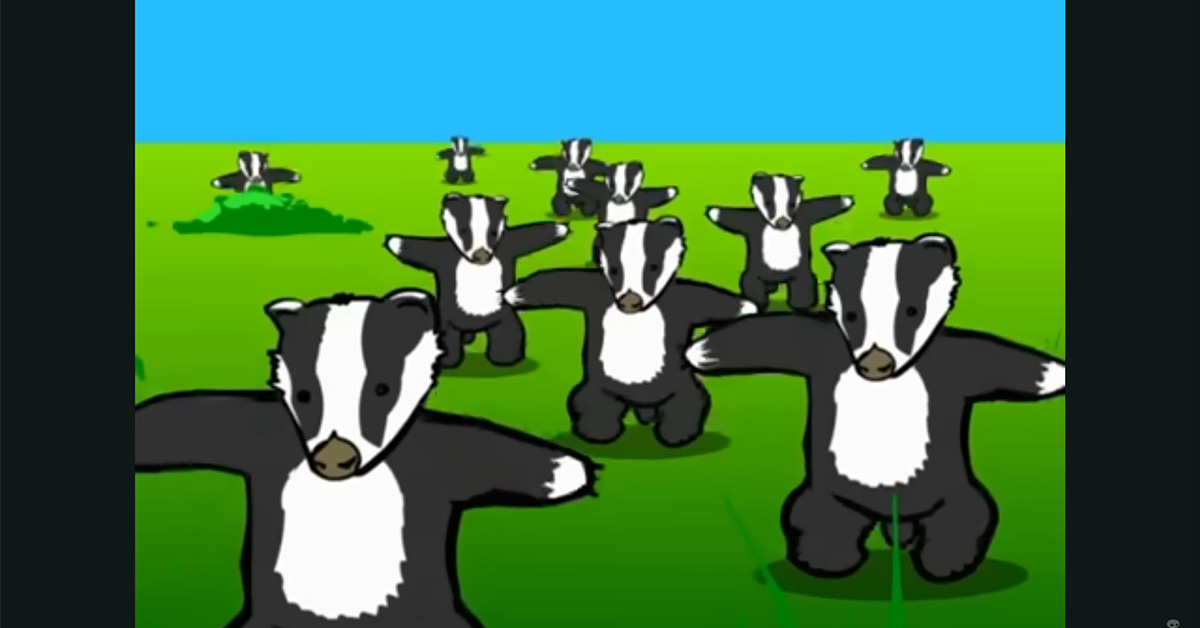
Before TikTok loops, before YouTube reaction videos, before every joke had to be clipped, captioned, reposted, stitched, and turned into a sound, there was a line of cartoon badgers doing a little dance.
That was basically it.
Badger. Badger. Badger. Badger.
Then a mushroom.
Then, suddenly, a snake.
And somehow, this tiny piece of 2003 Flash animation nonsense became one of the most recognisable internet memes of the early web.
Not because it had a clever twist.
Not because it made a point.
Not because anyone could explain why it was funny without sounding slightly unwell.
It was funny because it was stupid, catchy, weirdly hypnotic, and absolutely impossible to remove from your brain once it got in.
- FIRST SEEN September 2003
- PLATFORMS B3ta, Weebl’s Stuff, YouTube
- POPULARITY Official MrWeebl YouTube upload shows ~34M views (snapshot).
- FIRST KNOW CREATOR Jonti “Mr Weebl” Picking
- HASHTAGS #BadgerBadgerBadger, #MrWeebl, #WeeblsStuff, #MushroomMushroom, #Snake
What Was Badger Badger Badger?
Badger Badger Badger, also known as The Badger Song or simply Badgers, was a short looping Flash animation created by British animator and musician Jonti Picking, better known online as Mr Weebl or Weebl. It first appeared online in September 2003, during the golden age of odd little Flash cartoons that people shared by sending links to each other like cursed artefacts.
The animation itself is beautifully basic:
- a row of cartoon badgers bouncing in rhythm
- a mushroom appearing in front of a tree
- a snake sliding across a desert
- a voice chanting exactly what is on screen
- a loop that keeps going until you either close the tab or become part of the song
That was the whole operation.
The lyrics were not exactly Dylan.
“Badger badger badger badger…”
“Mushroom, mushroom…”
“A snake! A snake!”
Then it starts again.
It was the kind of thing that made perfect sense on the old internet, which is to say it made no sense at all.
The Early Web Was Built for This Kind of Nonsense
To understand why Badger Badger Badger spread, you have to remember what the internet looked like in 2003.
There was no TikTok.
YouTube did not exist yet.
Facebook had not opened to the public.
A lot of people were still using forums, email chains, MSN Messenger, IRC, personal websites, and slightly dodgy Flash portals with names that sounded like they were invented at 2 a.m.
This was the era of Newgrounds, Albino Blacksheep, B3ta, Weebl’s Stuff, and a million tiny sites packed with strange animations, games, loops, and jokes that looked homemade because they were.
That mattered.
Flash animations were small enough to load on slower connections, easy to share, and perfect for short, repeatable internet humour. You did not need a production company, a ring light, or a strategy. You needed a weird idea, some audio, and enough technical ability to make a badger move up and down.
Badger Badger Badger landed perfectly in that environment.
It was short.
It looped forever.
It worked instantly.
It annoyed people in a way that made them want to annoy someone else with it.
Very early internet logic.
Examples
- Original home – Weebl’s Stuff: Badger Badger Badger (site archive/modern page). Weebls Stuff
- YouTube – MrWeebl (official): “Badgers : animated music video.” YouTube
- 10-hour loop (YouTube): Endurance-meme variant. YouTube
Where Did It Come From?
The creator, Jonti Picking, was already known for Weebl’s Stuff, a site full of surreal animated songs and Flash oddities. Badger Badger Badger was one of those weird little creations that looked disposable at first, then somehow outlived almost everything around it.
The original animation went live on B3ta.com on 2 September 2003, according to archived accounts of the meme’s history. Its original Flash version looped indefinitely, which was a crucial part of the experience. You did not “watch” Badger Badger Badger so much as accidentally surrender to it.
Picking later said the inspiration partly came from Whigfield’s “Saturday Night”, specifically the idea of using an annoying repeated sound in the background. The lyrics were originally more like placeholder nonsense, but as sometimes happens with internet culture, the placeholder became the thing.
Which feels about right.
A surprising number of internet classics began as someone messing around, not as someone trying to create a “viral moment.”
Why Did Everyone Become Obsessed With It?
The obvious answer is: because it gets stuck in your head like a tiny woodland curse.
But there were a few reasons Badger Badger Badger worked so well.
It Was Instantly Understandable
There was no setup. No backstory. No reference you had to understand. The song literally named the things on screen.
Badger.
Mushroom.
Snake.
That was the joke.
The simplicity made it travel easily. You could send it to anyone, anywhere, and they would understand within seconds that they had been given something deeply pointless.
It Was Built Like an Earworm
The beat was repetitive. The chant was repetitive. The animation was repetitive.
Then, just when your brain adjusted to the badgers, along came “mushroom, mushroom”.
Then the snake arrived like a plot twist written by a seven-year-old.
A snake! A snake!
Not exactly prestige television, but extremely effective.
It Was Annoying in a Shareable Way
A lot of early internet humour worked because it was mildly hostile.
You sent someone a link not because you wanted to enrich their day, but because you wanted them to also have the dumb thing stuck in their head.
Badger Badger Badger was perfect for that. It was not offensive. It was not complicated. It was just irritating enough to become social.
The old web loved that.
A Tiny Timeline of Badger-Based Internet History
Here’s the rough shape of how this ridiculous thing became internet folklore:
- September 2003 — Badger Badger Badger appears online as a Flash animation by Jonti Picking / Weebl.
- 2003–2004 — It spreads through forums, Flash sites, email links, chatrooms, and early web communities.
- 2004 onwards — Parodies, remixes, football versions, Christmas versions, and endless references begin appearing.
- 2009 — It is still being discussed as one of the defining internet fads of the early web era.
- 2013 — A campaign version, Save the Badger Badger Badger, is released in response to UK badger culling, featuring Brian May and Brian Blessed alongside Weebl.
- 2023 — Weebl marks the meme’s 20th anniversary with a new version, 20 Years of Badgers.
- 2026 — The animation is included in the British Film Institute’s Online Video collection, meaning the badgers have effectively entered the archive. Yes, really.
The Flash Era Had Its Own Weird Rhythm
Part of the reason Badger Badger Badger still feels so tied to its time is that it belongs completely to the Flash animation era.
Flash was where the internet went to be strange before social platforms standardised everything. It gave independent creators a way to make short animations, games, interactive jokes, and musical loops without needing a studio or broadcaster.
The results were often crude, chaotic, and extremely memorable.
This was the same general online ecosystem that gave us things like Peanut Butter Jelly Time, Homestar Runner, We Like the Moon, Magical Trevor, Salad Fingers, and countless animations that lived somewhere between comedy, nightmare, and “someone learned Flash last weekend.”
Compared with modern content, Badger Badger Badger is almost aggressively simple. No thumbnail face. No title screaming at you. No algorithm-friendly pacing. No “watch to the end.”
Just badgers.
A mushroom.
Snake.
Repeat.
Why the Mushroom and Snake Made It Funnier
The funniest thing about Badger Badger Badger is not really the badgers. It is the interruption.
The badgers establish the pattern. Your brain settles into the chant. Then the song suddenly swerves into “mushroom, mushroom”, with complete confidence, as though this was always where the piece was heading.
Then, after enough mushroom, there is “a snake!”
The snake section is treated like a dramatic reveal, despite the fact that nothing has happened and nothing will happen. It is just a snake. But because the song announces it with such urgency, your brain accepts that the snake is somehow important.
That is the joke in miniature: nonsense delivered with absolute commitment.
Early internet humour loved that. The less something explained itself, the more people quoted it.
The Meme Spread Before “Going Viral” Had a Formula
Today, virality often has a recognisable shape. A short video catches on. People remix it. Influencers use the audio. Brands arrive late and ruin it. Someone writes a thread explaining why it matters. Everyone gets bored by Thursday.
Badger Badger Badger came from an older, slower, stranger internet.
People discovered it through:
- forums
- Flash portals
- personal blogs
- email chains
- MSN Messenger links
- IRC chats
- school computer rooms
- someone saying, “Have you seen this stupid badger thing?”
That last one did a lot of heavy lifting.
There was no central feed pushing it to everyone. It moved because people deliberately passed it around. Which made it feel a bit more like finding an odd object in the woods and handing it to your mate.
The Parodies and Spin-Offs
Like any early meme with a simple structure, Badger Badger Badger was very easy to parody.
Once people understood the rhythm, you could swap in almost anything. The original also spawned official and unofficial variations, including seasonal versions, football-themed versions, and later remixes. There was even a Euro 2004 football version and a 2010 World Cup version involving vuvuzelas, because apparently that was a sentence history required us to have.
One of the more notable later versions was Save the Badger Badger Badger in 2013, linked to opposition against UK badger culling and featuring Brian May from Queen and actor Brian Blessed. It is one of those facts that sounds made up until you remember the internet has always been like this.
A silly meme had become recognisable enough to be used in an actual campaign.
That is a very strange career path for a cartoon mushroom.
Why People Still Remember It
A lot of early memes vanished because they were too tied to old technology, broken websites, or very specific communities. But Badger Badger Badger stuck around because it was easy to remember and even easier to quote badly.
You only need three ingredients:
Badger. Mushroom. Snake.
That is basically the whole file compressed into language.
It also became a nostalgia marker for people who were online in the early 2000s. Mention Badger Badger Badger to the right person and you can watch their face do two things at once: recognise the song immediately, then regret recognising it.
That is the power of a proper earworm.
From Throwaway Meme to Archive Material
The funniest twist in the story is that Badger Badger Badger has now been treated as something worth preserving.
The British Film Institute included Badgers in its Online Video collection, alongside other examples of web-native screen culture. The BFI describes the collection as covering online video as a major form of moving image culture, from viral memes to video essays and other internet-born formats.
So yes: the badgers are now part of screen heritage.
This might sound absurd, but it actually makes sense. Early web culture is fragile. Flash was discontinued. Old websites disappeared. Files got lost. Links rotted. Whole chunks of internet history now survive through archives, reuploads, emulators, and people who refused to delete ancient folders from old hard drives.
Preserving something like Badger Badger Badger is not just about saving a silly animation. It is about saving a piece of how people used to experience the internet.
A very annoying piece, admittedly.
But still.
Why Badger Badger Badger Still Works
The modern internet is faster, slicker, louder, and far more optimised. Every platform has its own language. Every trend arrives already halfway merchandised. Even nonsense often feels engineered.
Badger Badger Badger comes from a different world.
It has no explanation.
It has no monetised follow-up strategy.
It has no call to action.
It does not ask you to like, subscribe, follow, share, or turn on notifications.
It simply appears, chants at you, shows you a mushroom, warns you about a snake, and starts again.
That is probably why it lasted.
It is pure old-internet nonsense: tiny, weird, musical, repetitive, and somehow still funny after all these years.
Or at least funny enough that your brain will now be saying “mushroom, mushroom” for the rest of the afternoon.
