


Overview
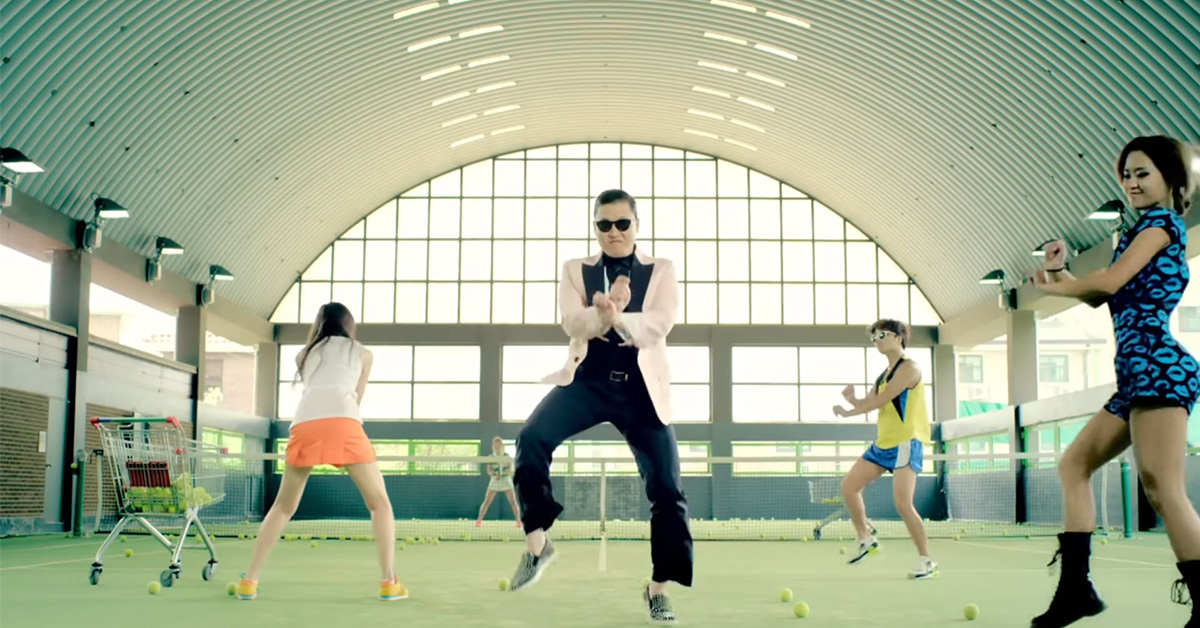
In 2012, a South Korean rapper in sunglasses pretended to ride an invisible horse through car parks, elevators, saunas, buses, stables, and a suspicious amount of wind-machine footage.
That should have been the whole story.
Instead, PSY’s “Gangnam Style” became one of the most famous internet moments of all time — the song that turned K-pop into a global conversation, made YouTube history, confused parents, fuelled thousands of parody videos, and briefly made it socially acceptable for grown adults to gallop at weddings.
It was loud. It was ridiculous. It was weirdly slick.
And for a few months, it was absolutely everywhere.
- FIRST SEEN July 2012
- PLATFORMS X (Twitter), YouTube
- POPULARITY First video to 1B views (Dec 21, 2012); 2B (May 2014); 5B+ by Dec 2023; historically the most-viewed video Nov 24, 2012 → Jul 10, 2017.
- FIRST KNOW CREATOR PSY (Park Jae-sang) – official music video uploader/artist
- HASHTAGS #GangnamStyle, #OppaGangnamStyle, #HorseDance
What Was Gangnam Style?
“Gangnam Style” was a 2012 single by South Korean artist PSY, released with a music video on YouTube on 15 July 2012. The video quickly became the kind of thing people didn’t just watch — they sent it to someone else with a message like, “What is this?”
The song itself is a bouncy electro-pop track built around one unforgettable hook: “Oppa Gangnam Style.”
The video had all the ingredients of early-2010s internet gold:
- A simple dance move anyone could copy badly
- Bright, bizarre visuals
- A chorus that stuck in your head even if you didn’t speak Korean
- A main character who looked completely serious while doing something deeply unserious
- Enough randomness to make people keep watching just to see what happened next
The horse-riding dance was the big one. You crossed your wrists, bounced like you were on an invisible pony, and instantly became part of the bit.
No lessons required.
The Meaning Behind “Gangnam Style”
The funny thing is, “Gangnam Style” wasn’t just random nonsense. It was also a joke about a very specific place.
Gangnam is an affluent district in Seoul, associated with wealth, status, luxury shopping, cosmetic clinics, nightlife, and expensive taste. Think designer brands, polished appearances, and people trying very hard to look like they’re living a high-end life.
PSY was poking fun at that image.
The song plays with the idea of a man presenting himself as classy, stylish, and desirable — basically someone with “Gangnam style” — while the video constantly undercuts that with absurd visuals. He is not sipping champagne on a yacht. He is dancing in a parking garage. He is yelling in a sauna. He is being blasted by debris while looking like a man who has fully committed to the bit.
That contrast was the joke.
A lot of international viewers didn’t catch the satire at first, and honestly, they didn’t need to. The video worked even if you had no idea what Gangnam was. But knowing the context makes it better: it wasn’t just PSY being goofy for no reason. It was PSY making fun of status culture while dressed like someone who had accidentally walked into a luxury advert and started causing problems.
Examples
Who Was PSY Before Gangnam Style?
To much of the world, PSY seemed to appear out of nowhere in 2012.
In South Korea, though, he was not some random novelty act who got lucky with a meme. His real name is Park Jae-sang, and by the time “Gangnam Style” went global, he was already an established performer known for comic energy, big live shows, and not exactly fitting the clean-cut idol mould.
That mattered.
A lot of K-pop’s global image at the time was polished, highly choreographed, and idol-group focused. PSY was different. He was older than the typical breakout idol, cheekier, stranger, and much less interested in looking flawless.
He didn’t go viral because he looked like a perfect pop star.
He went viral because he looked like someone having more fun than everyone else in the room.
How Gangnam Style Spread
The original “Gangnam Style” video landed on YouTube in July 2012. At first, it moved through K-pop fans, Korean media, and the usual internet-sharing channels. Then it started crossing over into the wider web.
By late summer, it had become one of those videos that seemed to appear everywhere at once: YouTube, Facebook, Twitter, blogs, morning TV, office emails, school corridors, and eventually every wedding DJ’s emergency folder.
A rough timeline gives you the shape of it:
- 15 July 2012 – PSY uploads the official “Gangnam Style” music video to YouTube.
- August 2012 – International attention starts building, helped by reaction videos, shares, and press coverage.
- September 2012 – The video becomes YouTube’s most liked video, earning a Guinness World Record after passing more than 2.2 million likes.
- 30 September 2012 – “Gangnam Style” reaches No. 1 in the UK Singles Chart, making PSY the first South Korean musician to top the UK chart.
- December 2012 – It becomes the first YouTube video to hit one billion views.
- 2014 – It becomes the first YouTube video to require a 64-bit view counter, because the old one literally could not handle the number of views.
That last detail still feels fake, even though it isn’t.
The YouTube Milestone That Made It Legendary
The biggest part of the Gangnam Style story is YouTube.
On 21 December 2012, the music video became the first video of any kind to reach one billion views on the platform. Guinness World Records recorded it at 1,000,382,639 views that day.
Today, one billion views is still impressive, but it no longer feels impossible. In 2012, it felt like watching the internet invent a new scale for popularity in real time.
Before Gangnam Style, YouTube hits were huge. After Gangnam Style, they could be planetary.
YouTube later celebrated the video as the start of its Billion Views Club, calling it the trailblazer for the many music videos that would later pass that mark.
Then came the even funnier technical footnote.
In 2014, Gangnam Style reached 2,147,483,647 views — the maximum number that could be stored by a signed 32-bit integer. YouTube had to upgrade its counter system to 64-bit because PSY’s horse dance had bullied the maths.
That is probably the cleanest possible definition of “too viral for the website.”
Why People Became Obsessed With It
Part of the appeal was that Gangnam Style didn’t need explaining.
You could show it to someone with no setup and within 30 seconds they understood the assignment: this man is stylish, the beat is catchy, the video is strange, and we are apparently riding horses now.
A few reasons it spread so well:
- The dance was instantly copyable. You didn’t need rhythm. You barely needed dignity.
- The hook was easy to mimic. Even people who knew no Korean could shout “Oppa Gangnam Style” with alarming confidence.
- The video rewarded rewatching. Every scene had some new odd detail: the elevator guy, the stable, the sauna, the kids dancing, the explosion of rubbish.
- It felt global without being smoothed out. It didn’t sound like it had been designed in a Western pop lab.
- It was funny without needing subtitles. The physical comedy carried a lot of the joke.
And crucially, PSY himself didn’t seem embarrassed by any of it.
That made the whole thing work. He wasn’t winking at the camera like someone desperate for a meme. He performed the absurdity with total commitment.
The Celebrity Phase
Every big viral moment eventually reaches the celebrity participation stage, and Gangnam Style got there quickly.
PSY appeared on American television, taught the dance to Britney Spears on Ellen, and became a regular face in Western media coverage. The Guardian noted at the time that he had taught Britney the dance on US TV as the track climbed the UK charts.
Then came the truly odd moment: PSY at the United Nations.
In October 2012, PSY visited the UN, where Secretary-General Ban Ki-moon met him and joined in the invisible-horse routine. The Guardian covered the meeting, which is one of those sentences that sounds like a joke until you remember 2012 really was like that.
There were also parodies, flash mobs, sports-team versions, military versions, school versions, wedding versions, office versions, and endless local-news segments where presenters bravely attempted the dance while everyone pretended this was normal broadcasting.
For a while, every institution on Earth appeared to ask the same question:
“Should we do a Gangnam Style video?”
Many did.
Not all should have.
The Chart Weirdness
For something as massive as Gangnam Style, one detail still surprises people: in the United States, it did not hit No. 1 on the Billboard Hot 100.
It peaked at No. 2 and stayed there for several weeks, which is obviously still huge, but also feels strange given how unavoidable the song was. South Korean news agency Yonhap later noted that “Gangnam Style” stayed at No. 2 for seven weeks.
Part of the issue was timing.
The music industry was still adjusting to how powerful YouTube had become. In early 2013, Billboard began incorporating YouTube views into the Hot 100 formula more directly, a change that helped Baauer’s “Harlem Shake” debut at No. 1.
So Gangnam Style became one of those awkward transitional moments: absolutely gigantic online, but arriving just before the charts had fully caught up with how people were actually consuming music.
In other words, it helped prove the system was out of date.
Very horse-dance of it.
The Parody Machine
A proper 2012 viral hit had to generate parodies. That was the law.
And Gangnam Style generated a ridiculous amount of them.
There were versions for:
- Universities
- Police departments
- Politicians
- Sports teams
- Military units
- TV shows
- Local businesses
- Random offices where someone clearly had access to a camera and too much confidence
Some were genuinely funny. Some were painful. Some were basically hostage videos with choreography.
But the scale of the parody wave showed how perfectly the original video fit the remix culture of the time. This was peak YouTube parody era, when a viral format could be copied, localised, re-captioned, lip-synced, flash-mobbed, and uploaded before anyone had finished asking whether they had permission.
Gangnam Style was especially easy to adapt because it had a clear visual language: suit, sunglasses, horse dance, big gestures, absurd confidence.
That was enough.
Why Gangnam Style Was Different From Other Viral Songs
There had been viral music before Gangnam Style. There had been novelty hits, dance crazes, meme songs, and strange videos passed around forums and early YouTube.
But this one felt different because it crossed so many boundaries at once.
It was:
- A K-pop song that reached mainstream Western audiences
- A non-English-language hit that didn’t rely on translation
- A music video that became bigger than the song itself
- A dance meme before TikTok made dance memes part of everyday pop culture
- A YouTube record-breaker that changed how people thought about online scale
It also arrived at the perfect time. YouTube was already powerful, but not yet as algorithmically polished as it would become. Twitter was fast. Facebook was still a major sharing machine. TV producers were constantly mining the internet for “have you seen this?” segments.
Gangnam Style was built for that ecosystem.
It was short enough to share, weird enough to discuss, catchy enough to replay, and visual enough to work even with the sound half-understood.
Did Gangnam Style Help K-Pop Go Global?
Yes — but with a bit of nuance.
Gangnam Style did not single-handedly create global K-pop fandom. Korean pop music already had international fans long before 2012, especially across Asia, and groups like Girls’ Generation, BIGBANG, Wonder Girls, 2NE1, and others had been building global audiences.
But PSY’s hit did something different: it forced mainstream Western media to pay attention.
For many casual viewers, Gangnam Style was the first Korean-language pop song they had ever heard, or at least the first one they saw treated as a global mainstream event. It made the idea of a Korean artist dominating YouTube feel possible — not niche, not fringe, not “foreign music” tucked into a side category.
Later, acts like BTS and BLACKPINK would become global giants in a much more sustained way. Their success came from fandom power, streaming strategy, social media fluency, and years of industry groundwork.
But Gangnam Style was an early battering ram.
It showed that a Korean song could smash through language barriers using humour, visuals, choreography, and sheer repeatability.
The “Too Big To Escape” Problem
Of course, the downside of becoming that viral is that eventually everyone gets tired.
By late 2012 and early 2013, Gangnam Style had moved from “fun internet discovery” to “song you hear at every public event whether you asked for it or not.” That’s the natural life cycle of a mega-hit: first it’s funny, then it’s everywhere, then someone plays it at a school assembly and the magic begins to leak out.
PSY was also stuck with a nearly impossible follow-up problem.
How do you follow the first YouTube video to hit a billion views?
You don’t, really. Not in the same way.
His 2013 single “Gentleman” also did massive numbers and reached No. 5 on the Billboard Hot 100, but it was always going to live in the shadow of Gangnam Style.
That’s not a failure. It’s just what happens when your previous single breaks the measuring equipment.
The Later Legacy
The strangest thing about Gangnam Style now is that it feels both ancient and modern.
Ancient, because it belongs to a very specific internet era: pre-TikTok, heavy Facebook sharing, YouTube as the centre of viral culture, and everyone still acting amazed that something online could become a real-world phenomenon.
Modern, because the mechanics are basically what still drives viral music today.
A catchy audio clip. A repeatable dance. A video that makes people want to copy it. A sound that travels across platforms faster than anyone can professionally react.
You can draw a pretty straight line from Gangnam Style to later viral music moments on TikTok, where songs become global through short clips, choreography, memes, and endless imitation.
The difference is that PSY did it before the machine was fully built.
By 2023, the official video had passed 5 billion views on YouTube, another reminder that this was not just a quick internet gag that vanished after a week.
Why People Still Remember It
People remember Gangnam Style because it was one of the first online moments that made YouTube feel bigger than television.
It wasn’t just a music video. It was a shared global reference point. Everyone knew the dance. Everyone knew the chorus. Everyone had seen at least one terrible parody. Everyone had watched at least one adult in a suit attempt the horse move with the haunted look of someone doing team-building.
And unlike a lot of viral moments from that era, it still holds up better than it probably should.
The video is still funny. The song still works. PSY still looks like he knows exactly what he’s doing.
That’s the thing people sometimes forget about Gangnam Style. It wasn’t just viral because it was weird.
It was viral because it was good at being weird.
Final Thought
Gangnam Style was the rare internet phenomenon that started as a joke, became a record-breaking global hit, made music-industry people rethink YouTube, and left behind one of the most recognisable dance moves of the 2010s.
It was satire. It was pop. It was meme fuel. It was a K-pop gateway for millions of people who had never paid attention before.
And somehow, it was also just a man in sunglasses yelling “Oppa Gangnam Style” while galloping through increasingly stupid locations.
Sometimes that’s all the internet needs.
